By Analyst Team · Updated 2026-07-11 · 9 min read
An IPTV box connected and ready for streaming — a complete cord-cutting solution for live television.
If you are tired of paying outrageous cable bills each month yet still want access to hundreds of live channels, sports leagues, and international programming, you have likely searched for an IPTV box solution. The streaming landscape has shifted dramatically, and understanding exactly what an IPTV box does — and whether it suits your needs — is the first step toward saving money without sacrificing content.
This complete guide explains how IPTV boxes work, compares them to popular alternatives like the Fire Stick, highlights honest limitations, and walks you through getting started today. By the end, you will know whether an IPTV box is the right cord-cutting tool for your household.
LIMITED TIME AVAILABILITY
Unlock Full IPTV Box Access
Unlock complete high-definition information and priority access packs. Lock in your pricing model today before plans return to standard regional metrics.
What Is an IPTV Box Exactly?
An IPTV box is a compact hardware device that connects to your television and home internet network to stream live television channels and on-demand content over the internet rather than through traditional cable, satellite, or antenna signals. IPTV stands for Internet Protocol Television, meaning the video is delivered using the same data protocols that power the web.
Think of an IPTV box as a purpose-built streaming receiver. Unlike smart TVs that come with built-in apps, an IPTV box offers greater flexibility, faster processors, and dedicated software designed to handle the specific demands of live TV streaming — including electronic program guides (EPGs), recording capabilities, and multi-screen viewing.
The device itself resembles a small set-top box or dongle. Most models include an HDMI output for video, Wi-Fi or Ethernet connectivity, a USB port for external storage or accessories, and a remote control. Some premium units support 4K HDR output, Dolby Atmos audio, and Bluetooth peripherals.
Behind the hardware, the real engine is the IPTV subscription service you pair it with. This is the software platform that delivers channel packages, video-on-demand libraries, and catch-up TV features directly to your device.
How It Works Step by Step
Understanding the flow helps you appreciate how seamless the experience can be:
- Connect the box — Plug the IPTV box into your TV via HDMI and connect it to your home internet using Wi-Fi or an Ethernet cable for the most stable connection.
- Power on and configure — The box boots into its operating system (usually Android TV or a proprietary Linux-based interface) where you connect to Wi-Fi and sign into your Google account if applicable.
- Install the IPTV app — You download a dedicated IPTV player app such as TiviMate, IPTV Smarters, or Perfect Player directly onto the box. This is the interface through which you will browse and watch channels.
- Enter subscription credentials — Your IPTV service provider gives you a URL, username, and password. You input these details into the app, which authenticates your account and downloads the channel list and EPG data.
- Start watching — The channel guide populates. You scroll, select, and begin streaming live television instantly. Many services also include a video-on-demand library with movies and series.
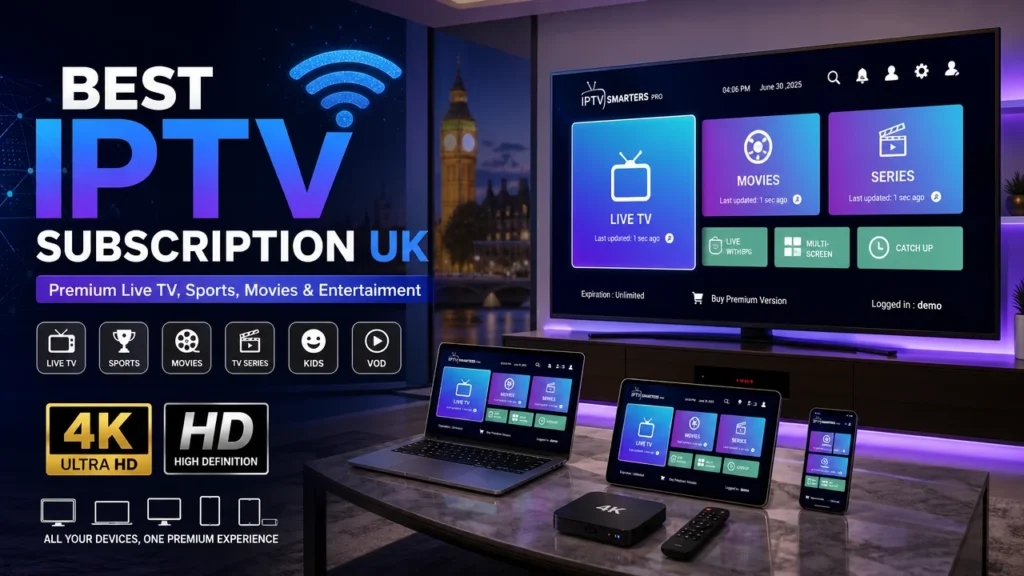
Concrete Benefits of Using an IPTV Box
Why choose an IPTV box over a smart TV app or an Amazon Fire Stick? The advantages are substantial for certain users:
- Massive channel selection — A quality IPTV subscription through a box can deliver 10,000+ live channels including international content, premium sports packages, and 24/7 news networks that cable simply cannot match.
- Lower monthly cost — Instead of $120+ per month for cable, a good IPTV box subscription with no contract typically runs between $10 and $25 per month depending on the package and video quality tier.
- Full 4K HDR support — Many modern IPTV boxes handle 4K resolution at 60 frames per second with HDR10 and Dolby Vision, delivering picture quality that rivals or exceeds cable broadcasts.
- Multi-device and multi-room streaming — Most subscriptions allow simultaneous streams across multiple devices, meaning one account covers your living room, bedroom, and even mobile viewing.
- DVR and catch-up TV — You can record live programs to a connected USB drive or cloud storage, and access catch-up TV that lets you rewatch content from the past several days.
- Portability — Unplug the box, take it on vacation or to a friend's house, plug it into any TV with internet, and your full channel lineup follows you.
Secure special promotional rates instantly before the window closes.
Activate Your IPTV Box Subscription Now →Honest Limitations You Should Know
No technology is perfect, and IPTV boxes come with a few drawbacks that honest buyers need to consider before committing:
Pros
- Massive channel count including regional sports and international networks
- Fraction of cable cost — often under $20 per month
- Portable across TVs and locations
- 4K HDR and Dolby Atmos support on premium boxes
- No long-term contracts required with most providers
Cons
- Requires stable high-speed internet (25 Mbps minimum for HD)
- Service reliability depends on provider uptime and maintenance
- Initial setup has a learning curve for non-tech-savvy users
- Some providers have legal gray areas depending on content licensing
- Customer support quality varies widely between resellers
IPTV Box vs Fire Stick vs Smart TV Apps
This comparison table helps you visualize how an IPTV box stacks up against the Amazon Fire TV Stick and standard smart TV apps for live TV streaming:
| Feature | IPTV Box | Amazon Fire Stick | Smart TV Apps |
|---|---|---|---|
| Processor power | High — dedicated TV chipset | Medium — quad-core | Low to medium |
| Ethernet port | Yes — included | Requires dongle | Rarely included |
| Channel capacity | 10,000+ channels | 500-1,000 (via apps) | 100-400 (built-in) |
| 4K HDR output | Yes — full support | 4K on Premium model | Depends on TV model |
| USB storage for DVR | Yes | Limited | Rarely |
| Monthly subscription cost | $10-$25 | $40+ (with app bundles) | $50-$120 (cable-like) |
For users seeking the best IPTV box for live sports, the dedicated box wins hands-down due to the Ethernet stability, USB DVR capabilities, and ability to run premium IPTV apps without restrictions. Fire Sticks are better for casual streamers who already use Amazon Prime. Smart TV apps work for basic needs but lack the customization and channel breadth of a dedicated IPTV box.
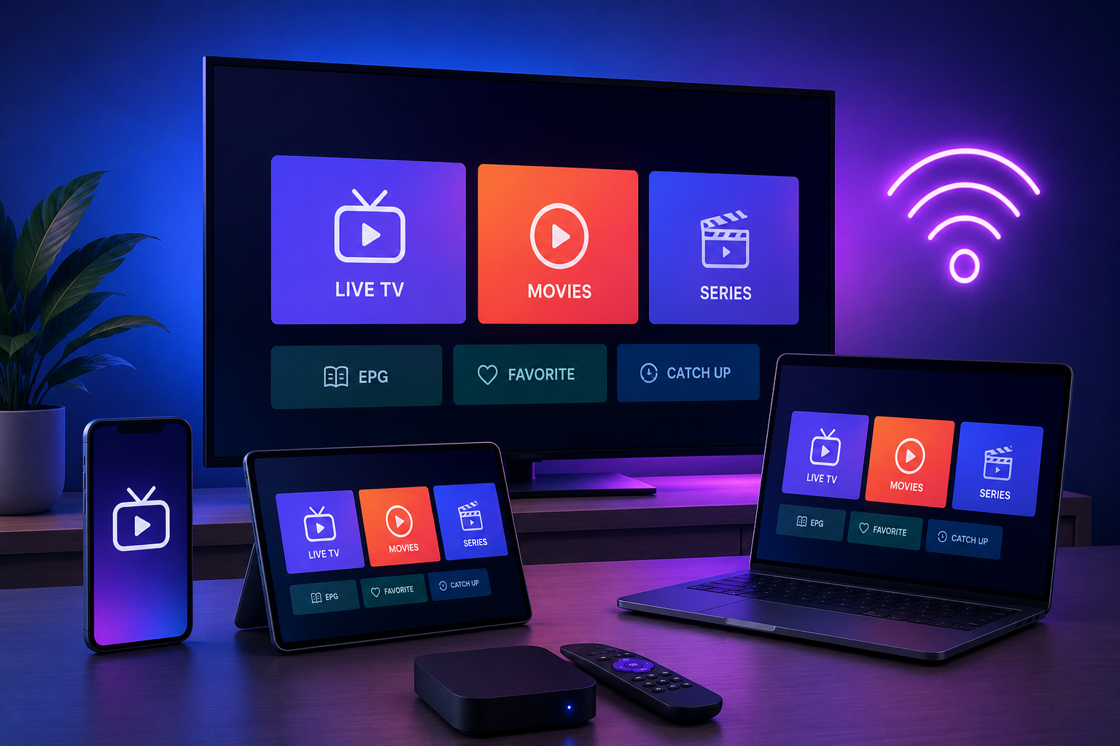
Who Is an IPTV Box For?
An IPTV box is not for everyone, but it perfectly serves several distinct user profiles. The following types of viewers get the most value:
- Sports fanatics — If you need live access to Premier League, NFL, NBA, UFC, and international leagues without paying for elite sports cable packages, an IPTV box offers the most comprehensive sports coverage at the lowest price.
- International viewers — Expats and multicultural households benefit from IPTV boxes that aggregate channels from dozens of countries in one interface — think Indian, Filipino, Arabic, Latin American, and European content side by side.
- Cord-cutters on a budget — Families tired of climbing cable bills find that a cheap IPTV box with Wi-Fi and a $15 monthly subscription replaces $150+ cable packages with more channels.
- Travelers and RV dwellers — The portability of an IPTV box means you bring your home channel lineup wherever you go, as long as you have internet access.
- Tech enthusiasts — Users who enjoy tinkering with settings, customizing EPG layouts, and optimizing streaming setups love the control an IPTV box provides over the viewing experience.
How to Get Started: 7 Practical Steps
Ready to set up your own system? Follow these concrete steps to go from zero to streaming in less than an hour:
- Choose your IPTV box hardware — Decide between a budget model (under $50) with Android 11 and 2GB RAM or a premium 4K box with 4GB RAM and gigabit Ethernet. Look for models with active cooling vents if you plan long viewing sessions.
- Select a subscription provider — This is the most critical decision. Research providers that offer a no-contract monthly plan, a free trial period of at least 24 hours, and customer support via live chat or ticket system.
- Connect your hardware — Plug the box into your TV's HDMI port, connect the power adapter, and run an Ethernet cable from your router to the box for the most stable connection. Wi-Fi works but introduces potential buffering during peak hours.
- Install the IPTV app — From the Google Play Store on Android-based boxes, download a reliable player like TiviMate (paid version unlocks all features) or IPTV Smarters Pro. Install and launch the app.
- Enter your subscription details — Your provider will send you an M3U URL or Xtream Codes portal details. Input these into the app. The channel list and EPG data will populate automatically within 30 seconds.
- Configure the EPG and favorites — Spend 10 minutes organizing your channel list. Mark your favorite sports, news, and entertainment channels. Set the EPG time zone to your location so program timings are accurate.
- Test and adjust — Channel surf for 15 minutes. Check picture quality on HD and 4K channels. If you experience buffering, lower the streaming protocol from HLS to MPEG-TS in the app settings, or switch to a wired Ethernet connection.
Final Subscription Window:
Main Offer Today →Affiliate Disclosure: Clicking this secure link verified by our network supports our team through standard partnership terms at zero extra cost to your invoice.
Frequently Asked Questions
How do I find the best IPTV box for live sports streaming?
Look for an IPTV box with at least 4GB of RAM, a fast quad-core processor, and gigabit Ethernet support. The box must handle 4K at 60fps without stuttering. Pair it with a sports-focused subscription service that offers dedicated sports channels like ESPN, Sky Sports, beIN Sports, and local league broadcasters. A free trial of the service before committing to a long plan is essential.
How do I set up an IPTV box step by step?
The setup process involves connecting the box to your TV via HDMI and your router via Ethernet, booting the device, installing an IPTV player app from the Google Play Store, entering your subscription provider's portal details (M3U URL or Xtream Codes), and then organizing your channel list within the electronic program guide. Most users complete the full setup in under 20 minutes.
What is the difference between an IPTV box and a Fire Stick for streaming live TV?
An IPTV box is purpose-built for running IPTV apps with dedicated processing power, Ethernet ports, USB storage for DVR, and full codec support for 4K streaming. A Fire Stick is a general-purpose streaming dongle optimized for Amazon's ecosystem. IPTV boxes generally offer better performance for live TV streaming, especially for sports with fast motion, while Fire Sticks are better for casual streaming of Netflix and Prime Video.
Where can I buy an IPTV box subscription with no contract?
Many IPTV service providers offer month-to-month subscriptions with no long-term commitment. The best approach is to search for verified providers that offer a free trial or a single-month plan. Reputable services allow you to cancel anytime and often provide multiple connection profiles so you can use the same subscription on your IPTV box and mobile devices simultaneously.
What internet speed do I need for a 4K IPTV box?
For stable 4K streaming on an IPTV box, you need a minimum of 25 Mbps download speed per device. For households with multiple simultaneous streams, aim for 50 Mbps or higher. A wired Ethernet connection is strongly recommended over Wi-Fi for 4K content because wireless interference can cause buffering during high-motion scenes like live sports.
Can I use an IPTV box on multiple TVs in my house?
Yes, most IPTV subscription providers allow multiple simultaneous connections from a single account, typically ranging from 2 to 5 streams. You will need a separate IPTV box for each TV, or you can use an IPTV app on a smart TV or Fire Stick with the same subscription credentials. Check the provider's connection limit before purchasing your plan.
What is a cheap IPTV box with Wi-Fi that still works well?
Budget-friendly IPTV boxes with built-in Wi-Fi typically range from $30 to $60. Look for models running Android 12 or newer with at least 2GB RAM and 16GB storage. Brands like X96, H96, and MXQ offer decent performance at low prices. While they lack Ethernet and premium build quality, they work well for HD streaming and occasional 4K content if your Wi-Fi signal is strong.
How do I write a fair IPTV box review for 4K performance?
When reviewing a 4K IPTV box, test across multiple bitrates including 15 Mbps, 25 Mbps, and 50 Mbps streams. Note buffering frequency, channel load times, EPG accuracy, and remote control responsiveness. Compare the same subscription on both the IPTV box and a Fire Stick to highlight differences. Mention thermal performance — some budget boxes overheat during long 4K sessions and throttle performance.